My Table Topics On Wisdom and Proverbs
I was Table Topics Master at Tampines West Toastmasters Club on Sunday April 14th 2019, appointed at the last moment and I had no topics planned. I should have had a page of table topics written on a blank page at the back of my diary for just such an occasion.
The President should - let's say could - have had a set of topics ready, written on card index cards, for a last minute replacement for the girl who was supposed to be Table Topics Master but was unable to attend. She should - let's say could - have sent in her table topics for somebody else to read. That's assuming she had prepared.
Fortunately, I always carry the old Competent Leader manual which evaluates as a table topics master. One of the things it suggests is that table topics should be related to the theme of the meeting. So, even if I had prepared, I would have needed to adapt my topics to the theme of the meeting.
I knew already that our meeting's guests included two non-Toastmasters who had come through Meetup. So I first described the meaning of the title Table Topics and the purpose of table topics:
Table Topics are impromptu speeches giving an opportunity to speak unprepared to those who are not speaking in a prepared, scheduled speech.
Picking Numbers
Singaporeans like gambling and luck and lucky numbers and Table Topics Masters often give them the choice of numbers to pick. This delays everybody whilst they decide to pick a number. Only the speaker bothers to wonder what to say.
Announce Topic Before Speaker
Instead I shall follow the principle of the clubs I have attended in the UK, in London, where I announce the topic and everybody is obliged to think up an answer, just in case they get picked on.
Volunteers
I shall ask for a volunteer. Somebody might have an urgent desire to speak and tell some personal story or experience. However, after a short, few seconds, if nobody volunteers, to avoid further delay, I shall pick somebody.
Quotation
The theme of the day was a quotation:
Wisdom is what you achieve after making a stupid mistake.
The word of the day was wisdom, or the root word wise. Somebody in the audience suggested adding the adverb wisely.
I wrote down ten topics but was only allowed time for seven:
1 What wisdom or wise words did you hear from a teacher when you were in primary or secondary school?
2 What wisdom did you learn from parents, grandparents or family?
3 What wisdom did you learn not from words but from watching how somebody else used their skill or experience or creativity?
4 What wisdom have you learned from the Internet's videos or YouTube. ...
5 What words of wisdom did you hear in a proverb which you found memorable?
6 Do you follow the advice of words of wisdom attributed to Benjamin Franklin: A place for everything and Everything in its place.
7 What wisdom would you impart to children, your children, grandchildren, nephews and nieces, or children you teach?
The topics evoked the following responses:
4 From YouTube I learned from a football coach that you must be patient. Other clubs spent a lot of money poaching the top players from other clubs. Instead, he picked schoolboys who already showed talent and spend years training them. Eventually they became top players loyal to his team.
2 From my mother I learned to cook. At first I let her cook. Then I realized I would be working overseas and would have to cook for myself, so I started learning from her.
6 No. If you visited my house, you would see that it is a mess. There is no place for anything and nothing is in its place. I wish the cutlery was all in the kitchen instead of the bathroom. I would love to be organized. But that just is not me. If I were organized in all aspects of my life, it would make my life much easier. I was late today because I spent ten minutes hunting for an umbrella. So, no, I do not follow this advice. But I wish that I did.
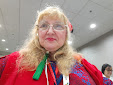
Angela Lansbury, ALB, ACG, travel writer and photographer, author and speaker.
The President should - let's say could - have had a set of topics ready, written on card index cards, for a last minute replacement for the girl who was supposed to be Table Topics Master but was unable to attend. She should - let's say could - have sent in her table topics for somebody else to read. That's assuming she had prepared.
Fortunately, I always carry the old Competent Leader manual which evaluates as a table topics master. One of the things it suggests is that table topics should be related to the theme of the meeting. So, even if I had prepared, I would have needed to adapt my topics to the theme of the meeting.
I knew already that our meeting's guests included two non-Toastmasters who had come through Meetup. So I first described the meaning of the title Table Topics and the purpose of table topics:
Table Topics are impromptu speeches giving an opportunity to speak unprepared to those who are not speaking in a prepared, scheduled speech.
Picking Numbers
Singaporeans like gambling and luck and lucky numbers and Table Topics Masters often give them the choice of numbers to pick. This delays everybody whilst they decide to pick a number. Only the speaker bothers to wonder what to say.
Announce Topic Before Speaker
Instead I shall follow the principle of the clubs I have attended in the UK, in London, where I announce the topic and everybody is obliged to think up an answer, just in case they get picked on.
Volunteers
I shall ask for a volunteer. Somebody might have an urgent desire to speak and tell some personal story or experience. However, after a short, few seconds, if nobody volunteers, to avoid further delay, I shall pick somebody.
Quotation
The theme of the day was a quotation:
Wisdom is what you achieve after making a stupid mistake.
The word of the day was wisdom, or the root word wise. Somebody in the audience suggested adding the adverb wisely.
I wrote down ten topics but was only allowed time for seven:
1 What wisdom or wise words did you hear from a teacher when you were in primary or secondary school?
2 What wisdom did you learn from parents, grandparents or family?
3 What wisdom did you learn not from words but from watching how somebody else used their skill or experience or creativity?
4 What wisdom have you learned from the Internet's videos or YouTube. ...
5 What words of wisdom did you hear in a proverb which you found memorable?
6 Do you follow the advice of words of wisdom attributed to Benjamin Franklin: A place for everything and Everything in its place.
7 What wisdom would you impart to children, your children, grandchildren, nephews and nieces, or children you teach?
The topics evoked the following responses:
4 From YouTube I learned from a football coach that you must be patient. Other clubs spent a lot of money poaching the top players from other clubs. Instead, he picked schoolboys who already showed talent and spend years training them. Eventually they became top players loyal to his team.
2 From my mother I learned to cook. At first I let her cook. Then I realized I would be working overseas and would have to cook for myself, so I started learning from her.
6 No. If you visited my house, you would see that it is a mess. There is no place for anything and nothing is in its place. I wish the cutlery was all in the kitchen instead of the bathroom. I would love to be organized. But that just is not me. If I were organized in all aspects of my life, it would make my life much easier. I was late today because I spent ten minutes hunting for an umbrella. So, no, I do not follow this advice. But I wish that I did.
Angela Lansbury, ALB, ACG, travel writer and photographer, author and speaker.
Labels: CL manual, Franklin, guests, impromptu, Meetup, pick numbers, purpose, quote, table topics, Tampines West, theme, Toastmasters Club, YouTube
posted by Angela Lansbury Author at 8:54 AM
0 comments